Why Cooking is my most underrated mindfulness practice.
- bloomcollectivebct

- Feb 9
- 3 min read

Sometimes I meditate by sitting cross-legged in silence.
Sometimes I meditate by chopping veggies.
Both work. One just smells better.
Cooking has a way of pulling me straight into the present moment. Not in a dramatic “I’ve transcended” way - more like “oh, my brain finally stopped circling.”
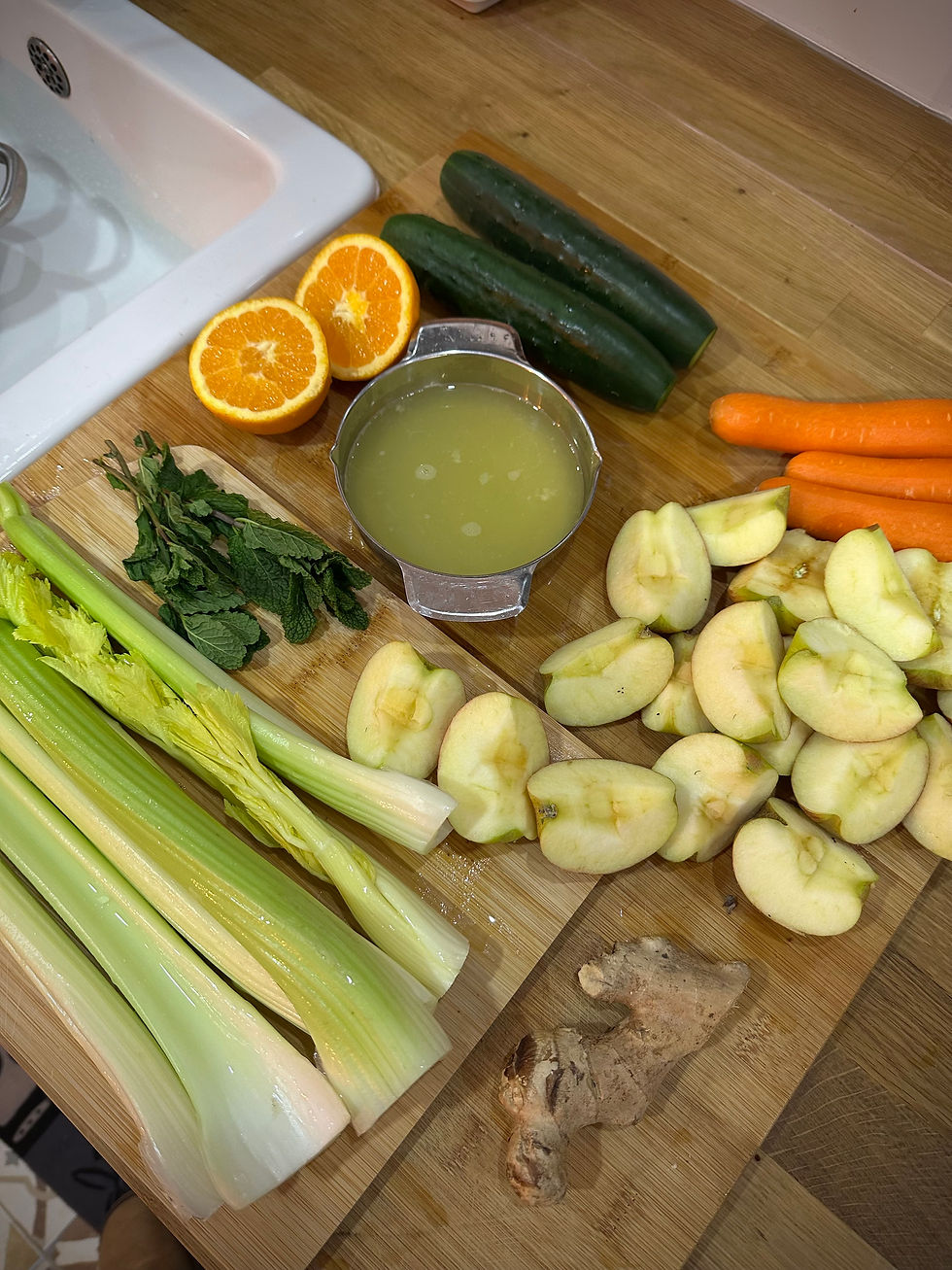
And when the ingredients come straight from our garden, the effect is even stronger. Freshly harvested fruits and vegetables are alive in a way supermarket food just isn’t, especially if you put in the time and work of planting it. You’re not just making dinner - you’re finishing a process that started in the soil.
Cooking is my low-effort mindfulness practice.
When I cook, I do one thing at a time.
No scrolling.No multitasking.No replaying embarrassing moments of the week.
It’s the sound of the knife on the board.Garlic hitting hot oil.The way colors shift as food cooks.Timing. Texture. Taste.
Cooking gently forces you into the now. Walk away for too long and something burns - instant feedback. Very grounding. Fresh ingredients make this even easier. A tomato picked five minutes ago doesn’t need much. Just attention.
Why slowing down in the kitchen actually helps.
We’ve been taught in our daily rush that cooking should be fast, efficient, and slightly stressful. But when you slow down, the benefits show up quickly:
A calmer mind - your hands stay busy, your thoughts quiet down
Lower stress levels - repetitive movements help regulate your nervous system
Better-tasting food - flavors develop when you don’t rush them
A sense of competence - you made something real, from scratch
Cooking sits right between creativity and practicality, which is why it supports mental well-being so naturally.
Turning cooking into a ritual (not a chore).
The shift happens when cooking stops feeling like another task and starts feeling like time you get to enjoy. A few small changes that made a big difference:
Plan the week, fill up your stocks ahead of time
Cooking simple meals on busy days
Playing music, a favorite podcast or the news to stay updated
Using tools that feel good to hold
Taking my time without apologizing
Cooking seasonally instead of forcing recipes
If you grow your own food, this rhythm happens almost automatically. You cook what’s ready. You respond instead of planning. Rituals don’t need rules. They just need intention.
Cooking as a way to stay connected to your loved ones.
Cooking doesn’t only ground you in the moment - it can connect you to people.
Trying a relative’s recipe.Flipping through old, handwritten cookbooks.Recreating a meal you grew up with.
Food carries memory. One smell can bring back an entire kitchen, a voice, a feeling.
Once you’ve cooked a dish enough times that it feels natural - adjusted, simplified, and made your own - it becomes something worth passing on. Writing recipes down or creating a family recipe book turns everyday meals into something lasting. It’s memory, preserved in food. And remember sharing is caring. :)
Take it outside when you can.

When the weather allows it and you have the opportunity, cooking doesn’t have to stay indoors.
Grilling or cooking on a plancha adds fresh air, fire, and a slower rhythm. You move differently outside. You breathe the fresh air. Things feel lighter. And let’s be honest: the smell of freshly cooked fish does not linger in your apartment. A small but very real win. :D
Outdoor cooking turns even simple ingredients into an experience. It’s less about perfection and more about presence.
Why cooking grounds me more than anything else.
Cooking brings me back into my body.
I notice when I’m hungry instead of pushing through it.I listen to what actually sounds good.I use my hands. I stand. I move. I taste.
It reconnects me with my senses in a way screens never do. Cooking isn’t about optimizing or performing - it’s about responding. When the food is freshly harvested or tied to family recipes, that grounding goes deeper. You’re connected to nature, memory, and care all at once. Past, present, and future meet over a cutting board.
That’s why cooking works so well as meditation. It’s practical, sensory, and nourishing - in every sense of the word. And at the end, it is not about perfection. Burn things. Fix them. Laugh. Learn.
No enlightenment required.
Cheers, Timmie.

Comments